

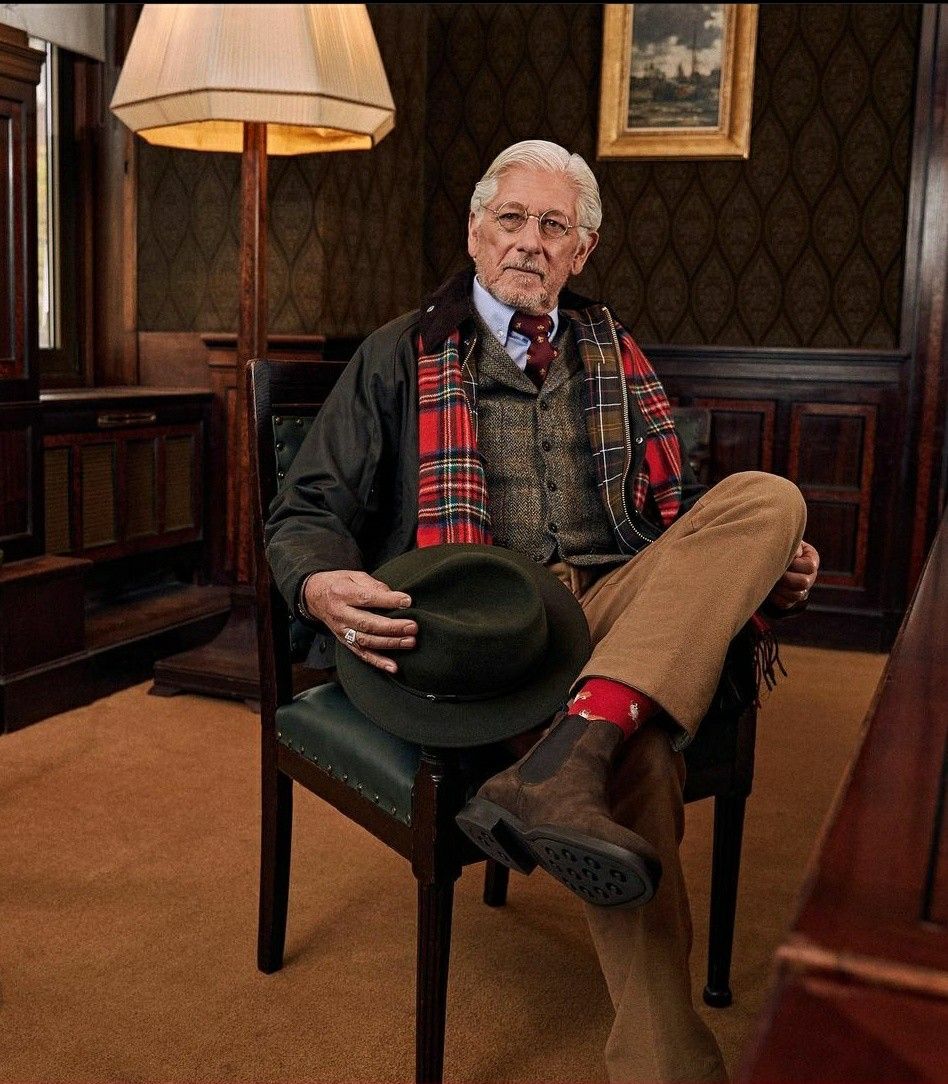
British old money style is not about wealth on display. It is about restraint, confidence and an instinctive understanding of what is appropriate. The defining feature is not what is worn, but how it is worn — and, just as importantly, what is deliberately avoided.
At its core, British old money style is shaped by attitude rather than appearance.
Quiet Confidence Over Visible Luxury
True British elegance has never relied on logos, excess or novelty. Old money style favours discretion. Clothing is chosen for its cut, fabric and longevity, not for its ability to attract attention.
Quiet confidence means dressing well without needing recognition. A well-cut jacket, a balanced silhouette and muted colours speak louder than any visible branding ever could.
This approach reflects a deeper cultural value: assurance does not need validation.
Understatement as a Principle
Understatement is not minimalism for effect. It is a long-established British principle rooted in social codes, education and tradition. Clothes are expected to blend seamlessly into daily life, never overpowering the wearer or the setting.
Neutral tones, classic proportions and subtle textures define the look. Nothing is exaggerated. Nothing is accidental.
The result is a style that feels calm, considered and enduring.
Style as Continuity, Not Expression
British old money style is rarely experimental. It does not seek reinvention. Instead, it values continuity — dressing in a way that would feel just as appropriate ten years ago as it will ten years from now.
This is why it remains so compelling. It is not fashion-driven. It is character-driven.